Showing posts with label sickle cell. Show all posts

Monday, March 12, 2012

Who Dat Doctor!

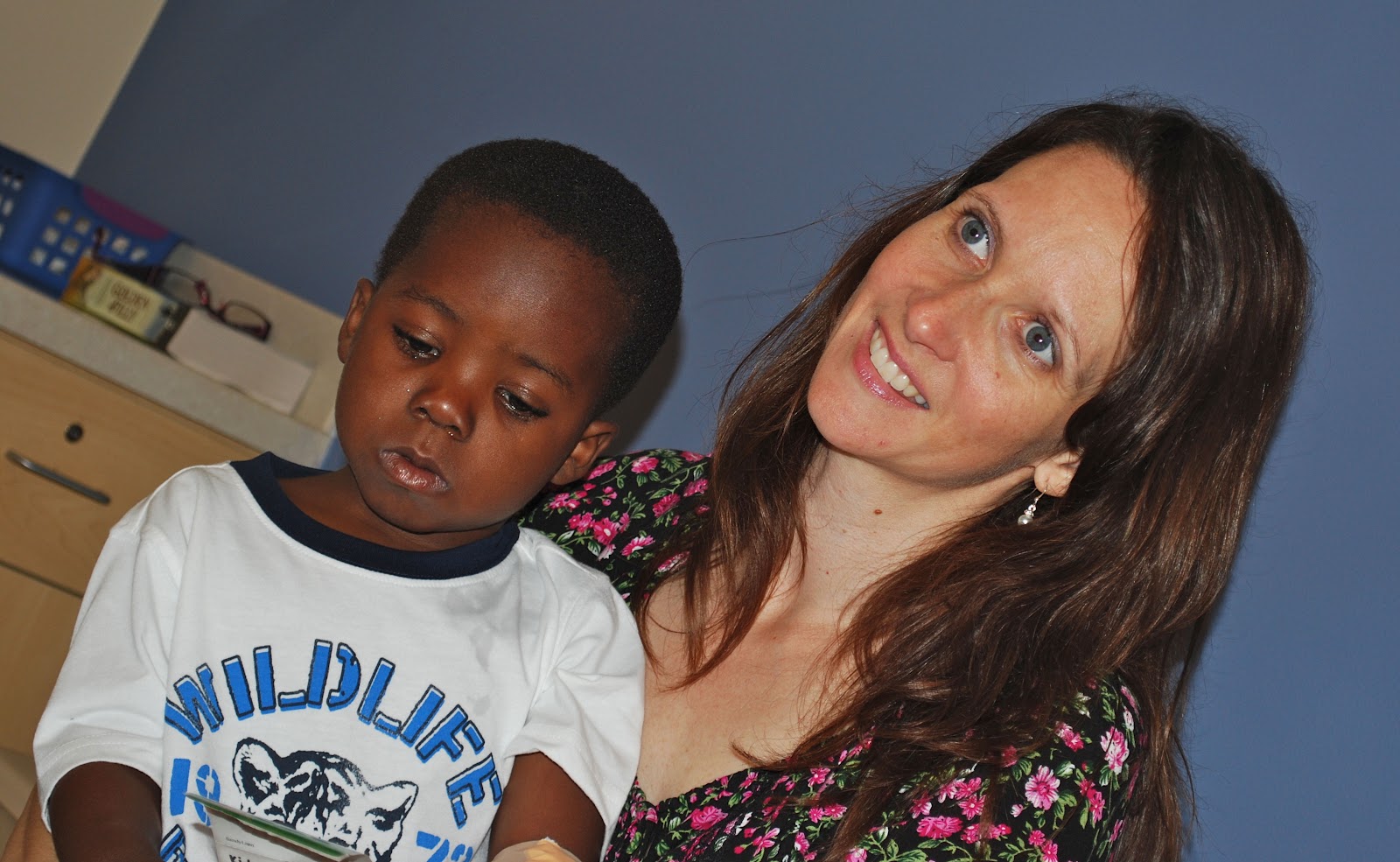
Dr. Kanter, Christopher and Kathy

We’ll tell you who dat doctor – it’s Dr. Julie Kanter from Tulane Hospital for Children and the Sickle Cell Center of Southern Louisiana. She delivered the best news today that we could have hoped for:  based on extensive blood work and tests performed in New Orleans, Christopher does not have sickle cell disease! 

One happy father and son!

However, Tulane has determined that he does have sickle cell trait, which is common to 1 in 10 people of African descent across the globe.

So, after the jumping for joy and dancing concluded, we asked Dr. Kanter a few key questions:
  • How did this misdiagnosis happen? 
  • What does this mean to Christopher in the future? 
  • How can we ensure that another child isn’t misdiagnosed?
How did this misdiagnosis happen? Dr. Kanter suspects that a single test was done by the Haitian doctors to form their opinion. She explained that this particular test is by far the least expensive and that it will indeed pick up any trace of sickle cell. However, Dr. Kanter explained that the test does not distinguish between sickle cell disease and sickle cell trait, a critical distinction. Unless the hospital did further testing, the doctors incorrectly concluded that he has the disease. We are unsure if this additional testing is available in Haiti. However, the news is still positive for others suspected of having this painful disease—blood can be drawn on the child in question and brought to the US to complete the test and get conclusive results. 


What does this mean to Christopher? It means he WON’T have to be on penicillin and folic acid for the rest of his life. He won’t have to undergo yearly testing to detect his propensity for strokes. He won’t have painful episodes that often lead to hospitalization and blood transfusions. Since he does have sickle cell trait, it DOES mean there is a 25% chance that he will pass along the trait or the disease to his children. It also means the he should have his spouse tested. If she has the disease or the trait, it drastically increases their chance of having a child with sickle cell. Christopher will see a sickle cell specialist in his teens for further testing and counseling in these matters. 


What does it mean to other children? When children receive a positive diagnosis for sickle cell, adoptive parents, caregivers and orphanage directors can request additional tests to confirm the diagnosis, avoiding unnecessary, costly and intrusive medical intervention.


 The Tulane team


We want to thank everyone—in Haiti, the US, Saudi Arabia and Canada—for their support of this child. Everyone played a critical part in Christopher’s life—from thoughts and prayers to financial support to medical treatment. Now he is in the loving arms of his forever family and to them we say, “Take care of our boy that we have loved for the past 3 years. He will be in our hearts forever.”

Saturday, March 10, 2012

HAITI :: Crash course in sickle cell disease

On Thursday, The Red Thread converged on Tulane Hospital for Children and the Sickle Cell Center of Southern Louisiana. After navigating a half dozen or so elevators (how many elevators does one building need?!) we finally found the pediatric unit and there he was, Christopher, on US soil! It was a beautiful moment that we had waited so long for—in his mother's arms, watching classic cartoons in the waiting room. 

Playing while we wait for the doctor

We were quickly ushered into an exam room and met by very friendly social workers and Dr. Kanter. She explained everything that would happen that afternoon: blood tests, pathology, a "sickle cell 101" session, etc. We discussed Christopher's current health and reviewed what we knew of his care and treatment in Haiti. 

One of the social workers drawing a diagram of how 
sickle cell trait and disease are passed from parent to child

In just a few hours, the sickle cell specialists demonstrated their broad scope of knowledge about the condition and shared much great information: 
  • the disease evolved from Africa 
  • although very prevalent, is does not exclusively affect people of African descent
  • 1 in every 4 African Americans has sickle cell trait or disease
  • both parents have to be carriers for it to be passed on to a child
  • each person has their own symptoms / complications that are unique to them
  • long-term effects of the disease on a person's health (excessive pain, organ problems, strokes)
  • how to know when a child needs to see a doctor (fever and other indicators)
  • life-long maintenance medications (penicillin, folic acid, etc)
  • annual testing to detect strokes
  • bone marrow transplants and requirements
While we all asked questions, Christopher had blood drawn and received a physical exam. Although a bit tearful, he re-emerged riding a tricycle and was quickly back to his previous rambunctious self!


Following our appointment, Dr. Kanter would review his labs and determine the kind of sickle cell he has, make referrals for specialists closer to the family's home, and develop a long-term treatment plan. after thanking the Tulane team for their time and expertise, we set up his appointment for Friday and took the family on a little New Orleans excursion.

Enjoying time on Mom's lap during the consultation

Friday, March 2, 2012

Haitian Orphan to Receive Free Sickle Cell Anemia Care At Tulane Hospital for Children


NEW ORLEANS – The Red Thread Promise has partnered with Tulane Hospital for Children and the Sickle Cell Center of Southern Louisiana (SCCSL) at Tulane to provide free medical care for a 4-year-old Haitian orphan. Christopher was diagnosed with sickle cell anemia as an infant in his home country of Haiti, the poorest nation in the Western Hemisphere. He is expected to arrive in New Orleans on March 9 to begin treatment at Tulane.

Young Christopher has lived most of his life in an orphanage in rural Haiti. His condition requires that he take daily medication and make frequent trips for medical care, putting a great toll on the child. The devastation from the 2010 earthquake in Haiti made it more difficult for Christopher to receive the medical treatment he so desperately needs.

“We have been supporting Christopher’s medical care for the majority of his short life, providing for his treatment while in the orphanage,” states Sonya Yencer, Vice President of The Red Thread Promise. “Now that he is in the States with his adoptive family, we are thrilled to continue serving this child with the generous help and support of Tulane Hospital for Children and SCCSL. We couldn’t ask for a better partnership.”

Christopher will soon travel to the New Orleans for a more comprehensive evaluation and medical care at Tulane Hospital for Children and the Sickle Cell Center of Southern Louisiana. Sickle cell anemia affects millions throughout the world. It is an inherited disorder found more commonly among people whose ancestors come from sub-Saharan Africa, South America, Cuba or Central America. New Orleans has a large population of sickle cell patients and some of the most advanced treatments are available at the Sickle Cell Center of Southern Louisiana, which is good news for Christopher.

Sickle cell anemia causes red blood cells, which are usually smooth and donut-shaped, to become stiff and assume a sickle shape. The sickled red cells can have difficulty traveling through small vessels and begin to stack up and cause blockages that deprive tissue and organs of oxygen-carrying blood. These blockages bring about episodes of severe pain and can ultimately damage tissue and vital organs. Currently, the only cure available for sickle cell disease is a bone marrow transplant; however the disease can be managed through proper medical treatment.

“While at Tulane, Christopher will undergo diagnostic testing to determine the level of disease severity,” said Dr. Julie Kanter, Assistant Professor of Pediatric Hematology-Oncology at Tulane, and the primary physician who will oversee Christopher’s medical care. “This will include blood tests, a cardiac exam and neurological testing. Tulane doctors will then recommend a treatment regimen for Christopher based upon the results of his medical tests.”

The Red Thread Promise will continue supporting Christopher throughout his stay in New Orleans and in the coming months so that he can continue to receive the medical care he needs.